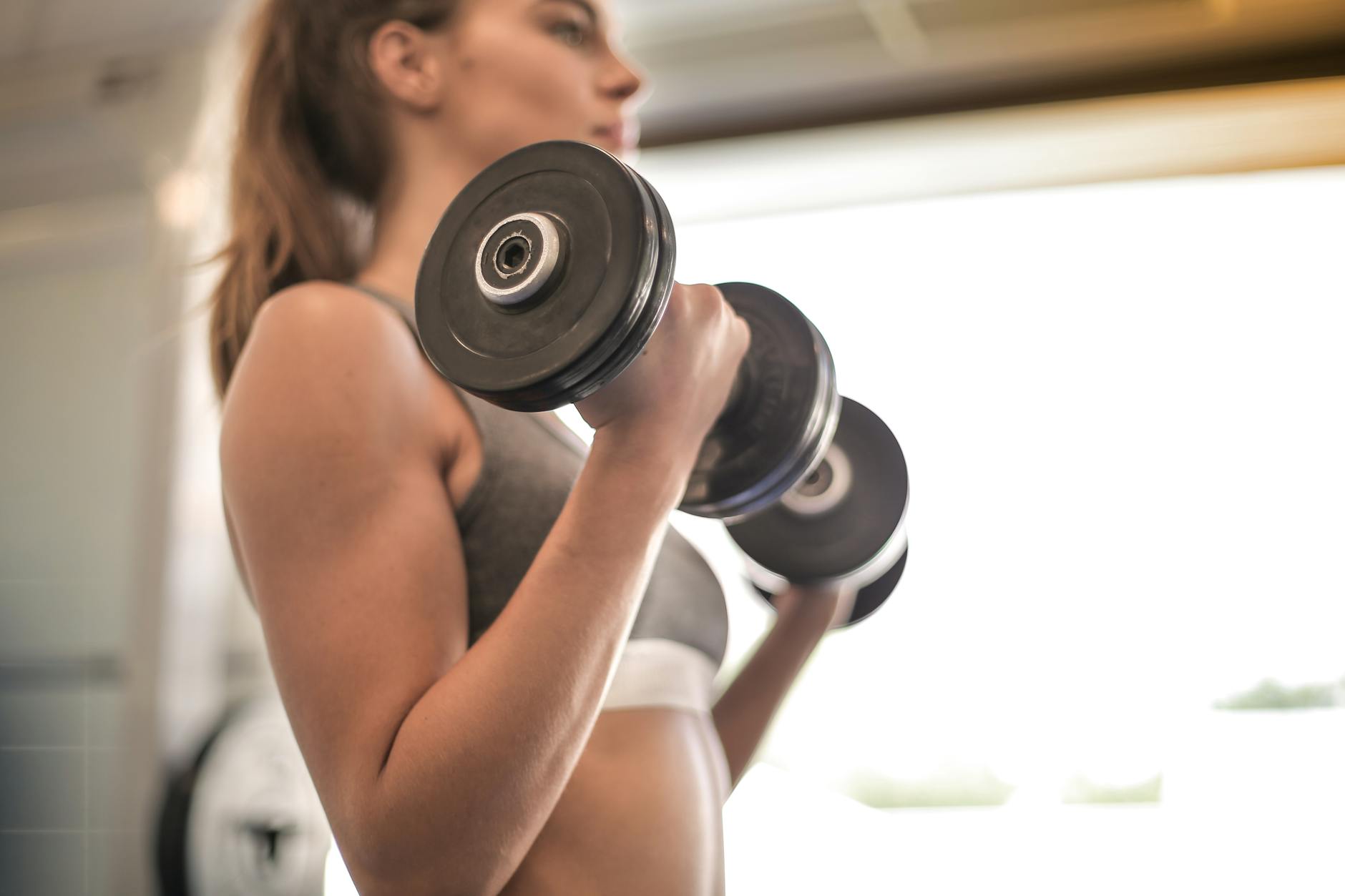
Use a pear-shaped body workout to build a strong upper body, train your legs and glutes well, and create the proportions you want over time. Run the three-day plan below for 8 to 12 weeks, log every working set, and progress the same exercises before adding more.
Pear shape is a visual starting point, not a diagnosis or destiny. Training cannot change the width of your pelvis or shoulders, and no exercise can spot-reduce fat from your hips or thighs. It can build muscle, improve strength, and gradually change how your proportions look.
What to Emphasize in a Pear-Shaped Body Workout
A pear or triangle shape usually means the hips look wider than the shoulders. If your goal is more visual balance, give your shoulders and upper back a little more weekly work while keeping enough lower-body training to build strong glutes, quads, and hamstrings.
Use this weekly emphasis:
| Area | Weekly target | Why it is in the plan |
|---|---:|---|
| Side and rear shoulders | 8-12 hard sets | Builds upper-body width and shoulder shape |
| Upper back and lats | 10-14 hard sets | Adds back strength and a balanced frame |
| Glutes | 8-12 hard sets | Builds hip strength and glute muscle |
| Quads and hamstrings | 6-10 hard sets each | Keeps the lower body strong and balanced |
| Chest, arms, and core | 4-8 hard sets each | Supports full-body strength and joint health |
These are starting ranges, not magic numbers. A hard set should finish with about 1 to 3 good reps left. If you are a beginner, start at the low end and earn more volume by recovering and getting stronger.
The 3-Day Pear-Shaped Body Workout
Train on three non-consecutive days, such as Monday, Wednesday, and Friday. Repeat the same plan for at least 8 weeks.
Day 1: Upper back, shoulders, and glutes
| Exercise | Sets | Reps |
|---|---:|---:|
| Lat pulldown | 3 | 8-12 |
| Dumbbell shoulder press | 3 | 8-12 |
| Hip thrust | 3 | 8-12 |
| Chest-supported row | 3 | 8-12 |
| Lateral raise | 3 | 12-20 |
| Dead bug | 2 | 8-10 each side |
Day 2: Legs, glutes, and balanced pushing
| Exercise | Sets | Reps |
|---|---:|---:|
| Leg press or goblet squat | 3 | 8-12 |
| Romanian deadlift | 3 | 8-10 |
| Dumbbell bench press | 3 | 8-12 |
| Bulgarian split squat | 2 | 8-10 each side |
| Cable kickback | 2 | 12-15 each side |
| Pallof press | 2 | 10-12 each side |
Day 3: Shoulders, back, and full body
| Exercise | Sets | Reps |
|---|---:|---:|
| Seated cable row | 3 | 8-12 |
| Reverse lunge | 3 | 8-10 each side |
| Incline dumbbell press | 2 | 8-12 |
| Single-leg Romanian deadlift | 2 | 8-12 each side |
| Lateral raise | 3 | 12-20 |
| Reverse fly | 3 | 12-20 |
Warm up with 5 minutes of easy movement and one or two lighter practice sets before the first big upper- and lower-body exercises. Rest 2 to 3 minutes after hip thrusts, presses, rows, squats, and hinges. Rest 60 to 90 seconds after raises, kickbacks, and core work.
If this is your first gym program, read Strength Training for Women Beginners for weight selection, setup, and a simpler starting option.
How to Make the Plan Fit Your Goal
For more upper-body balance
Keep the plan as written. The two lateral-raise sessions and three back exercises give your shoulders and upper back more direct attention without neglecting your lower body.
Do not turn every upper-body set into an arm exercise. Rows, pulldowns, presses, lateral raises, and reverse flies do more for the overall frame you are trying to build. The Shoulder Workout for Women and Back Workout for Women explain the form and progression for those priorities.
For more glute growth
Add one set to hip thrusts and cable kickbacks after you have completed the base plan for four weeks and are recovering well. Keep the Romanian deadlifts and lunges because glutes grow through several movement patterns, not one “best” exercise.
Use the Glute Workout Plan for Women if glute growth matters more to you than an upper-body emphasis. Do not combine both complete programs; choose one and progress it.
For fat loss
Keep lifting and use a modest calorie deficit. Add daily walking or two short cardio sessions because they are easy to recover from, not because they burn fat from the hips.
Fat loss happens across the body according to genetics and energy balance. A smaller waist, hips, or thighs cannot be ordered through a specific exercise. Use Body Recomposition for Women to set calories, protein, and weekly progress checks without crash dieting.
Progress Every Exercise Without Guessing
Use double progression for the full 8 to 12 weeks:
- Choose a weight you can control at the bottom of the listed rep range.
- Add reps over the next sessions while keeping the same form.
- When every set reaches the top of the range, add a small amount of weight.
- Return to the bottom of the rep range and repeat.
For example, perform lateral raises with the same dumbbells until you can do all three sets for 20 clean reps. Move to the next sensible weight and build from 12 reps again. If the jump is too large, slow the lowering phase or add reps before forcing heavier weight.
Log sets, reps, weight, and effort. Add volume only when your performance is rising, soreness is manageable, and you are recovering before the next session.
Eat and Recover for Muscle Growth
The workout creates a reason for your body to adapt. Food and recovery give it the resources.
- Eat protein across 3 to 4 meals each day.
- Keep calories near maintenance when strength and muscle are the priority.
- Use a small calorie deficit when fat loss is the priority.
- Sleep 7 to 9 hours when you can.
- Keep steps and cardio reasonably consistent.
- Compare strength, measurements, and photos every 4 weeks, not every morning.
Do not slash calories while adding extra workouts because you want faster shape change. Poor recovery makes progressive training harder and often turns a clear plan into random exercise.
Mistakes That Waste Your Time
Trying to shrink your legs with endless cardio
Cardio can support health and a calorie deficit, but it does not choose where fat leaves. Keep two lower-body exposures in the plan so your hips, knees, and legs stay strong.
Skipping lower-body training
A pear-shape goal does not make glutes or legs a problem to avoid. Train them with sensible volume and spend a few extra sets on shoulders and back if balance is the goal.
Changing exercises every week
Muscle and strength need repeated practice. Keep the same main lifts long enough to add reps or weight with clean form.
Following a body-type diet
There is no special pear-shape metabolism or somatotype menu. Set nutrition from your goal, activity, progress, hunger, and training performance.
Your Next Step
Schedule the three sessions and complete the first week with conservative weights. Then repeat the plan, log every set, and improve one rep or one small weight jump at a time.
For other shape-specific starting points, use Workout for Your Body Shape. If lower-body emphasis fits your goal, compare the Inverted Triangle Body Workout. If you want extra glute, shoulder, and upper-back work, compare the Rectangle Body Shape Workout. Choose one complete plan and run it for 8 to 12 weeks. Soma keeps your training, calories, protein, and progress together so you can adjust from real results instead of a body-type quiz. Download Soma free on the App Store.