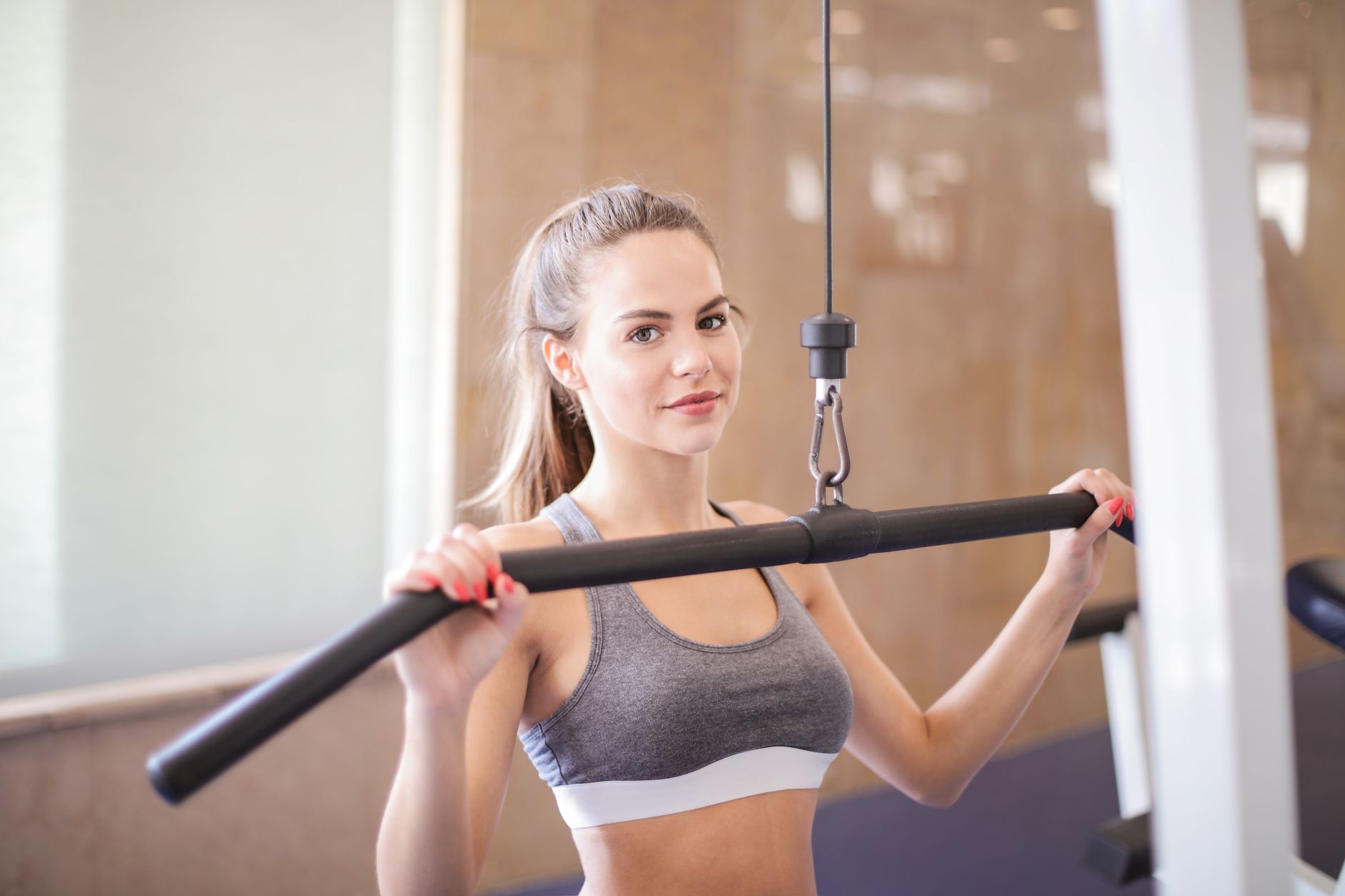
The Simple Plan: Train Back Twice Per Week
A good back workout for women should help you build shape, posture, and strength without turning upper-body day into a guessing game.
Start with this twice per week:
| Day | Focus | Exercises |
|---|---|---|
| Day 1 | Width + posture | Lat pulldown, seated row, face pull, back extension |
| Day 2 | Thickness + control | Assisted pull-up, one-arm dumbbell row, cable row, rear delt fly |
The action is simple: train your back twice per week, keep 1 to 2 reps in reserve, and write down the weight you used so you can add a little more over time.
Why Women Should Train Back
If you want an hourglass shape, your back matters. Glutes help build the lower-body curve, but shoulders and upper back help create the frame that makes your waist look more defined.
Back training also helps with:
- better posture
- stronger pulling strength
- less rounded-shoulder posture from sitting
- more balanced upper-body shape
- better control on deadlifts, rows, and hip hinges
Do not skip back day because you are worried about looking bulky. Building visible back muscle takes time, food, progressive training, and years of consistency. A beginner back workout will make you look stronger and more shaped, not huge.
The Best Back Exercises for Women
You do not need 12 exercises. You need a few pulls you can repeat and progress.
| Exercise | Main target | Why it works |
|---|---|---|
| Lat pulldown | Lats | Builds width and teaches vertical pulling |
| Seated cable row | Mid-back | Easy to control and progress |
| One-arm dumbbell row | Lats and upper back | Fixes side-to-side strength gaps |
| Assisted pull-up | Lats and arms | Builds toward real pull-ups |
| Face pull | Rear delts and upper back | Helps posture and shoulder control |
| Rear delt fly | Rear shoulders | Adds upper-body shape |
| Back extension | Lower back and glutes | Strengthens the hinge pattern |
If you are new, start with machines and cables. They make it easier to feel the right muscles before you chase heavier free weights.
Workout 1: Back Width and Posture
Do this on your first upper-body day of the week.
| Exercise | Sets | Reps |
|---|---:|---:|
| Lat pulldown | 3 | 8-12 |
| Seated cable row | 3 | 10-12 |
| Face pull | 3 | 12-15 |
| Back extension | 2 | 10-15 |
Rest 60 to 90 seconds between sets. Use a weight that feels hard by the last 2 reps, but not so heavy that you have to swing.
How to do lat pulldowns
Sit tall, grip the bar slightly wider than shoulder width, and pull your elbows down toward your ribs. Think about pulling with your elbows, not yanking with your hands.
Stop when the bar reaches your upper chest. Then let it rise with control. Do not lean way back and turn it into a weird half-row.
How to do seated cable rows
Set your chest tall, brace your core, and pull the handle toward your lower ribs. Pause for a second, then let your arms reach forward without rounding your whole back.
If you only feel your biceps, lower the weight and slow down the pull.
How to do face pulls
Set the cable around eye level. Pull the rope toward your forehead while your elbows move out and back. Keep the weight light enough that your shoulders do the work.
Face pulls are not an ego lift. They should feel clean and controlled.
Workout 2: Back Strength and Shape
Do this later in the week, ideally with at least 2 days between back sessions.
| Exercise | Sets | Reps |
|---|---:|---:|
| Assisted pull-up | 3 | 6-10 |
| One-arm dumbbell row | 3 | 8-12 each side |
| Cable row or chest-supported row | 3 | 8-12 |
| Rear delt fly | 2-3 | 12-15 |
This day is slightly heavier. Still keep your form strict. If your lower back is doing all the work, the weight is too heavy.
How to do assisted pull-ups
Choose enough assistance that you can control every rep. Start from a full stretch, pull your chest toward the bar, and lower slowly.
If pull-ups feel intimidating, use the lat pulldown instead for the first few weeks. You are not behind. You are building the pattern.
How to do one-arm dumbbell rows
Put one hand on a bench, keep your hips square, and row the dumbbell toward your hip. Do not twist your whole body to throw the weight up.
A good rep feels like your elbow is driving back, your shoulder blade is moving, and your torso stays stable.
Beginner Back Workout If You Only Have 30 Minutes
Use this when you are busy:
| Exercise | Sets | Reps |
|---|---:|---:|
| Lat pulldown | 3 | 8-12 |
| Seated row | 3 | 10-12 |
| Rear delt fly | 2 | 12-15 |
That is enough. Do it well, log it, and come back next week trying to beat one number.
How Heavy Should You Go?
Use a weight that leaves 1 to 2 reps in the tank. You should finish the set thinking, I could maybe do one more clean rep, not I survived that somehow.
Progress in this order:
- Keep the same weight and add reps.
- When you hit the top of the rep range on every set, add a small amount of weight.
- If form breaks, go back down and build again.
For example, if your lat pulldown is 3 sets of 8, 8, 7, keep the same weight next week. When it becomes 12, 12, 12, increase the weight slightly.
Common Mistakes
Going too heavy
If you have to swing, lean, or jerk every rep, your back is not getting better stimulus. Lower the weight and make the reps cleaner.
Only doing lower body
Glutes matter, but an hourglass look needs upper-body shape too. Back and shoulders help create that frame.
Pulling everything with your arms
Your biceps will help, but they should not be the main event. Think elbows back, chest tall, shoulder blades moving.
Changing exercises every week
Do not rebuild your workout every Monday. Repeat the same back exercises for 6 to 8 weeks so you can see if you are actually getting stronger.
How to Fit Back Training Into Your Week
Here is the easiest setup:
| Day | Workout |
|---|---|
| Monday | Glutes and hamstrings |
| Tuesday | Back, shoulders, and core |
| Wednesday | Rest or steps |
| Thursday | Lower body |
| Friday | Back, chest, arms, and core |
| Weekend | Rest, walking, or light cardio |
If you already follow an hourglass or upper-body plan, put these back exercises on those days. You do not need a separate 90-minute back day unless you love training that way.
What Results to Expect
In the first few weeks, you will mostly notice better control. Rows feel smoother. Pulldowns stop feeling awkward. Your posture may feel stronger.
After 8 to 12 weeks, you should see clearer changes: more upper-back shape, better shoulder balance, and stronger numbers in your rows and pulldowns.
Take progress photos from the back every 4 weeks. The scale will not tell you if your back is changing.
Final Takeaway
Train your back twice per week, use pulldowns and rows as your main lifts, and log every set so you can add reps or weight over time.
That is how you build shape without guessing.
If you want a simple plan that balances glutes, upper body, food, and progression, Soma builds your workouts and tracks your numbers in one place. You can also read Hourglass Workout Plan: Glutes, Shoulders, and Core, Upper Body Workout for Women, and 3-Day Workout Plan for Women next.