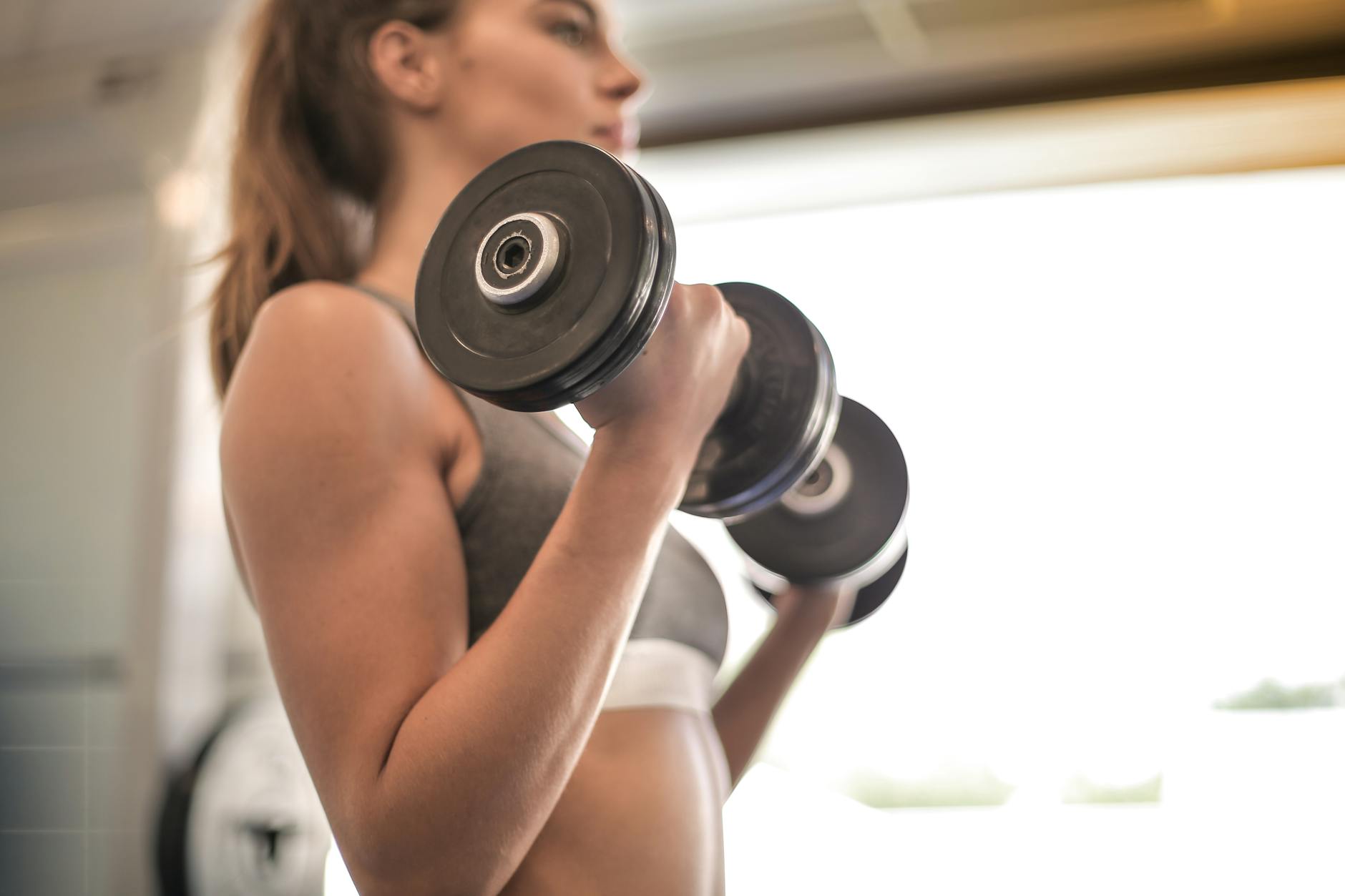
Start Here: What To Do This Week
Train three full-body gym days per week, keep at least one rest day between workouts, and repeat the same lifts long enough to add reps or weight.
That is the plan.
A good 3-day workout plan for women does not need six leg days, random TikTok circuits, or a different routine every Monday. It needs enough glute, leg, back, shoulder, and core work to build shape, plus a simple way to progress.
Use this split for 8 to 12 weeks before changing it.
The Weekly Schedule
Here is the easiest setup:
| Day | Workout |
|---|---|
| Monday | Workout A: Glutes, push, and pull |
| Tuesday | Rest or steps |
| Wednesday | Workout B: Legs, back, and shoulders |
| Thursday | Rest or easy cardio |
| Friday | Workout C: Glutes, quads, and upper body |
| Saturday | Optional walk, mobility, or rest |
| Sunday | Rest and check-in |
If your week is messy, use any three non-consecutive days. Monday, Thursday, Saturday works. Tuesday, Thursday, Sunday works. The rule is simple: do not stack all three lifting days back-to-back.
Your muscles need recovery to grow. More soreness is not the goal. Better performance over time is the goal.
Before Every Workout: 8-Minute Warm-Up
Do this before each session:
| Warm-up | Time or reps |
|---|---:|
| Incline walk, bike, or stair climber | 4 minutes |
| Bodyweight squats | 10 reps |
| Glute bridges | 12 reps |
| Band pull-aparts or cable face pulls | 12 reps |
| First main lift warm-up sets | 2 lighter sets |
The warm-up should make your first working set feel better, not steal energy from the workout.
If you are warming up for hip thrusts, do lighter hip thrusts. If you are warming up for squats, do lighter squats. Specific beats fancy.
Workout A: Glutes, Push, and Pull
| Exercise | Sets | Reps | Rest |
|---|---:|---:|---:|
| Hip thrust | 3 | 8-12 | 2 min |
| Dumbbell bench press | 3 | 8-12 | 90 sec |
| Lat pulldown | 3 | 8-12 | 90 sec |
| Goblet squat | 2 | 10-12 | 90 sec |
| Cable glute kickback | 2 | 12-15 | 60 sec |
| Plank | 2 | 30-45 sec | 60 sec |
This day trains the areas most women care about first: glutes, upper-body shape, and posture.
For hip thrusts, pause for one second at the top. Do not turn the lift into a lower-back bridge. Your ribs should stay down, your chin tucked, and your shins close to vertical at the top.
For dumbbell bench press, stop each rep when the dumbbells reach chest level. Control the lowering phase. If your shoulders feel cranky, use a slight incline or switch to a machine chest press.
For lat pulldowns, pull your elbows toward your ribs. Do not yank the bar with your hands and lean halfway back. Your back should do the work.
Workout B: Legs, Back, and Shoulders
| Exercise | Sets | Reps | Rest |
|---|---:|---:|---:|
| Romanian deadlift | 3 | 8-10 | 2 min |
| Seated cable row | 3 | 8-12 | 90 sec |
| Dumbbell shoulder press | 3 | 8-12 | 90 sec |
| Leg press | 3 | 10-12 | 2 min |
| Hamstring curl | 2 | 10-15 | 60 sec |
| Dead bug | 2 | 8-10/side | 60 sec |
This is your hinge and posture day.
Romanian deadlifts build glutes and hamstrings when you do them with control. Push your hips back, keep the weights close to your legs, and stop when your hamstrings are stretched. You do not need to touch the floor.
On leg press, use a range of motion you can control. Lower until your hips want to tuck or your lower back starts to round, then press back up. Deeper is only better if it stays clean.
Shoulder press and rows build the upper-body frame that makes your waist look smaller without endless ab circuits.
Workout C: Glutes, Quads, and Upper Body
| Exercise | Sets | Reps | Rest |
|---|---:|---:|---:|
| Squat or hack squat | 3 | 6-10 | 2 min |
| Incline dumbbell press | 3 | 8-12 | 90 sec |
| Assisted pull-up or pulldown | 3 | 8-12 | 90 sec |
| Walking lunge or split squat | 2 | 10/leg | 90 sec |
| Cable lateral raise | 2 | 12-15 | 60 sec |
| Cable crunch | 2 | 10-15 | 60 sec |
This workout gives you a second lower-body stimulus without turning the whole week into leg torture.
Choose squat or hack squat based on what feels stable. Beginners usually progress faster when the setup feels repeatable. If the barbell squat makes you nervous, use the hack squat or goblet squat for now. You can always build into barbell work later.
For lunges, hold onto a rack if balance is limiting the set. Balance should not be the reason your legs stop working.
Lateral raises matter more than beginners think. Strong shoulders help create an hourglass shape, improve posture, and make your upper body look trained without needing heavy weights.
How Heavy Should You Lift?
Use a weight that leaves 1 to 3 reps in reserve on most sets.
That means you finish the set knowing you could have done a couple more clean reps if you had to.
Too easy: you finish 12 reps and feel like you could do 20.
Too heavy: your form breaks, the range of motion shrinks, or you need momentum to finish.
Just right: the last reps are hard, but they still look like the first reps.
Beginners do not need to max out. You need clean reps you can repeat and track.
How to Progress Each Week
Use double progression.
Pick a rep range. Keep the same weight until you can hit the top of the range for every set. Then add a small amount of weight next time.
Example for hip thrusts:
| Week | Weight | Reps |
|---|---:|---:|
| 1 | 95 lb | 10, 9, 8 |
| 2 | 95 lb | 11, 10, 9 |
| 3 | 95 lb | 12, 11, 10 |
| 4 | 95 lb | 12, 12, 11 |
| 5 | 95 lb | 12, 12, 12 |
| 6 | 105 lb | 9, 8, 8 |
That is how muscle is built. Same lift. Better numbers. Good form.
If you change exercises every week, you never know whether you got stronger or just picked an easier variation.
Cardio: How Much Should You Do?
If your main goal is fat loss, add 7,000 to 10,000 steps per day before adding hard cardio.
If you enjoy cardio, do 2 easy sessions per week for 20 to 30 minutes. Keep them easy enough that they do not wreck your leg days.
Do not use cardio to punish yourself for eating. Use it to support health, appetite, and consistency.
For most beginners, three lifting days plus daily steps is enough to change how your body looks.
Nutrition Targets for Better Results
Training gives your body the signal. Food gives it the material.
Use these targets:
| Goal | What to do |
|---|---|
| Build muscle with minimal fat gain | Eat around maintenance or a small surplus |
| Lose fat while keeping shape | Use a small calorie deficit |
| Improve body recomposition | Hit protein, lift hard, and track weekly trends |
Protein target: eat 0.7 to 1 gram of protein per pound of goal body weight per day.
If your goal weight is 140 pounds, aim for 100 to 140 grams of protein per day. You do not need to be perfect. You need to be close most days.
A simple plate:
- one palm of protein
- one fist of carbs
- one thumb of fats
- one to two fists of fruit or vegetables
Track calories if you want faster feedback. If tracking makes you spiral, start with protein, steps, and workouts first.
The Beginner Mistakes to Avoid
Changing the plan too soon is the biggest one.
Other common mistakes:
- doing random glute finishers instead of progressing hip thrusts, squats, and RDLs
- training to failure on every set
- skipping upper body because you only want glutes
- cutting calories too hard and then wondering why lifts stall
- judging progress by scale weight only
- not writing down weights and reps
The scale can move slowly when you start lifting. Photos, measurements, strength numbers, and how clothes fit matter too.
How to Know the Plan Is Working
Check these once per week:
| Metric | Good sign |
|---|---|
| Workout log | More reps or weight on main lifts |
| Photos | Better shape, posture, or definition |
| Measurements | Waist, hip, or thigh changes match your goal |
| Energy | You can train hard without feeling wrecked |
| Consistency | You hit 2 to 3 sessions most weeks |
Do not change the plan after one bad workout. Everyone has off days.
Change something only after two to three weeks of the same problem.
If lifts are stalling and you feel tired, eat more, sleep more, or reduce a set or two. If lifts are improving and you feel good, keep going.
Final Takeaway
Start with three full-body workouts this week, log every set, and try to add one rep or a little weight whenever your form stays clean.
That is the action.
You do not need to become a gym girl before you start. You become one by repeating the plan long enough to see proof.
Soma makes that easier by giving you AI workout plans, workout logging, RPE tracking, calorie tracking, and photo food logging in one place. If you want your training and nutrition to stop living in five different apps, start here.