Start Here: What You Should Do
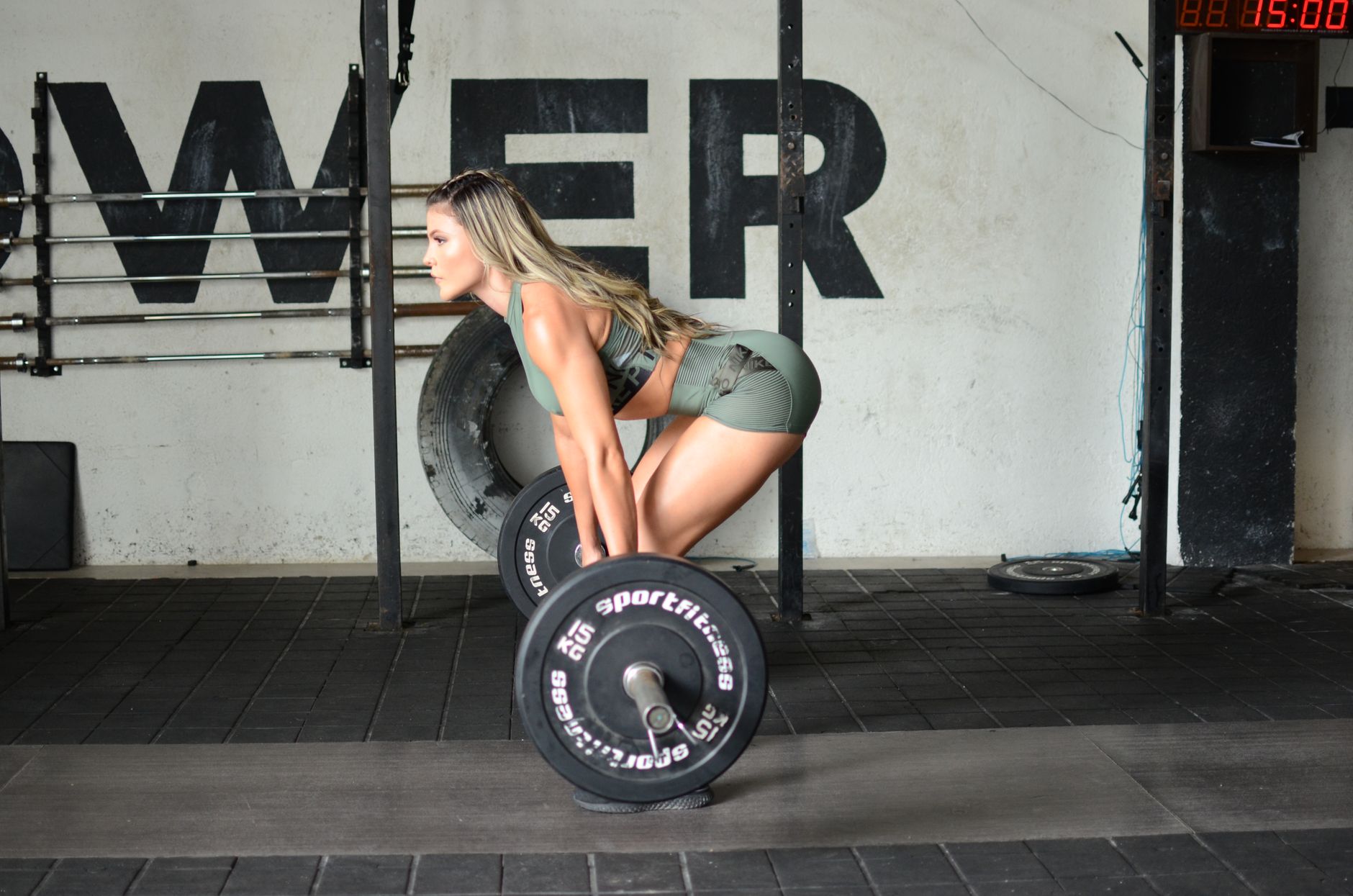
Use Romanian deadlifts to train your glutes and hamstrings by pushing your hips back, keeping soft knees, keeping the weight close, and stopping when you feel a deep hamstring stretch.
That is the whole lift. On your next lower-body day, pick a light weight and practice the hinge before you try to go heavy.
If you feel RDLs mostly in your lower back, do not add weight yet. Fix the setup first.
What a Romanian Deadlift Is
A Romanian deadlift, or RDL, is a hip hinge.
You start standing, lower the weight by pushing your hips back, then stand tall again by driving your hips forward. Unlike a regular deadlift, the weight usually does not start from the floor on every rep.
That small difference changes the feel of the exercise.
A conventional deadlift is usually heavier and starts from a dead stop. An RDL keeps tension on your glutes and hamstrings for the whole set.
That is why it is one of the best exercises for building your backside without needing a huge list of random glute moves.
What Muscles RDLs Work
Romanian deadlifts train:
- glutes
- hamstrings
- spinal erectors
- adductors
- core
- grip
- upper back stability
The main goal is glutes and hamstrings. Your back should work, but it should not feel like the star of the exercise.
If your lower back takes over every set, one of three things is usually happening:
- the weight is drifting away from your legs
- you are rounding your back at the bottom
- you are going lower than your mobility allows
The fix is not always stretching. Most of the time, it is learning where your useful range of motion ends.
How to Do a Romanian Deadlift
Use this exact order.
1. Start tall with the weight close
Hold the barbell, dumbbells, or kettlebells in front of your thighs.
Stand tall. Feet about hip-width apart. Ribs down. Core braced.
Do not start by leaning backward or arching hard. You want a strong neutral position, not a dramatic pose.
2. Soften your knees
Unlock your knees slightly.
This is not a squat. Your knees can bend, but they should not keep bending as you lower.
Think: soft knees, fixed knee angle, hips moving back.
That cue alone fixes a lot of ugly RDLs.
3. Push your hips back
Imagine trying to close a car door with your butt.
Your hips move backward. Your torso tilts forward. The weight slides down close to your legs.
Do not reach the weights toward the floor. Let them travel because your hips are moving back.
4. Keep the weight close
The bar or dumbbells should stay close to your thighs and shins.
If the weight drifts forward, your lower back has to fight harder. That is when RDLs start feeling sketchy.
A good cue: shave your legs with the bar.
You do not need to scrape yourself, but the weight should stay that close.
5. Stop when your hamstrings say stop
Lower until you feel a strong stretch in your hamstrings while your back stays flat.
For some people, that is just below the knees. For others, it is mid-shin.
Both are fine.
The goal is not to touch the floor. The goal is to load your glutes and hamstrings without losing position.
6. Stand tall by squeezing your glutes
Drive your feet into the floor and bring your hips forward.
Finish tall with your glutes squeezed. Do not lean back at the top.
Leaning back does not build more glute. It usually just annoys your lower back.
The Best RDL Form Cues
Keep these in your head:
- hips back
- ribs down
- weight close
- soft knees
- long spine
- stop at the stretch
- squeeze glutes to stand tall
You do not need all seven cues at once.
If you are new, use two: hips back and weight close.
Those two fix most problems.
Barbell vs Dumbbell RDLs
Both work. Pick the version you can control.
Dumbbell RDL
Best for beginners.
Dumbbells let your hands move naturally at your sides. They are easier to set up, easier to bail on, and less intimidating if you are still learning the hinge.
Use dumbbells if you are not confident with a barbell yet.
Barbell RDL
Best once your form is consistent.
A barbell makes it easier to load heavier over time. It also forces a more fixed path, which can be helpful if you already understand the movement.
Use a barbell when you can keep the bar close and control every rep.
Smith Machine RDL
Useful, but not magic.
The Smith machine can help beginners feel stable, but the fixed path may not match your body perfectly. If it feels awkward, use dumbbells instead.
Common RDL Mistakes
Mistake 1: Squatting the weight down
If your knees keep bending and your hips drop straight down, you are turning the RDL into a weird squat.
Fix it: keep your knees soft, then push your hips back.
Mistake 2: Reaching for the floor
Touching the floor is not the goal.
If you chase depth after your hamstrings stop giving you room, your back will round.
Fix it: stop where you can keep tension and position.
Mistake 3: Letting the weight drift forward
This is the fastest way to make RDLs feel like a lower-back exercise.
Fix it: keep the bar or dumbbells close enough that they almost brush your legs.
Mistake 4: Looking up
Cranking your neck up usually pulls your ribs open and makes bracing harder.
Fix it: keep your neck long and look slightly ahead of you on the floor.
Mistake 5: Going too heavy too soon
Heavy RDLs are great. Heavy ugly RDLs are not.
Fix it: earn the weight. Hit clean sets where every rep looks the same before you add more.
How Low Should You Go on RDLs?
Go as low as your hamstrings allow while your spine stays neutral and the weight stays close.
That may be different from the person next to you.
A simple rule:
- feel hamstring stretch: good
- feel lower back rounding: too low
- feel weight drifting forward: reset
- feel knees turning it into a squat: push hips back more
Most beginners should stop around mid-shin or just below the knee.
That is enough.
How Many Sets and Reps Should You Do?
For muscle growth, start with:
- 2 to 4 sets
- 8 to 12 reps
- 1 to 2 minutes rest
- 1 to 3 reps left in the tank
You should feel challenged, but not wrecked.
RDLs create a lot of soreness if you are new. Start conservative. Your hamstrings will tell you if you did too much tomorrow.
Where to Put RDLs in Your Workout
Put RDLs early in your lower-body workout, after your main squat or hip thrust if you have one.
Good lower-body order:
- Squat or hip thrust
- Romanian deadlift
- Split squat or lunge
- Leg curl
- Calves or core
If glutes are your priority, you can put RDLs right after hip thrusts. That pairing works well because hip thrusts challenge your glutes hardest near lockout, while RDLs challenge them in the stretched position.
How to Progress RDLs
Track your weight, reps, and effort.
A simple progression looks like this:
- Week 1: 30 lb dumbbells, 3 sets of 8
- Week 2: 30 lb dumbbells, 3 sets of 10
- Week 3: 30 lb dumbbells, 3 sets of 12
- Week 4: 35 lb dumbbells, 3 sets of 8
That is progress.
You do not need to add weight every session. Add reps first, then weight once the top of the rep range feels clean.
This is where Soma helps. Log your RDLs, reps, and RPE so you know whether you actually improved instead of guessing from memory.
The Bottom Line
Romanian deadlifts build glutes and hamstrings when you treat them like a hinge, not a squat.
Push your hips back. Keep the weight close. Stop at the stretch. Squeeze your glutes to stand tall.
Do that for clean sets of 8 to 12, track your progress, and add weight only when the reps stay repeatable.
Download Soma free on the App Store to track your RDLs, follow your lower-body plan, and see when it is time to progress.