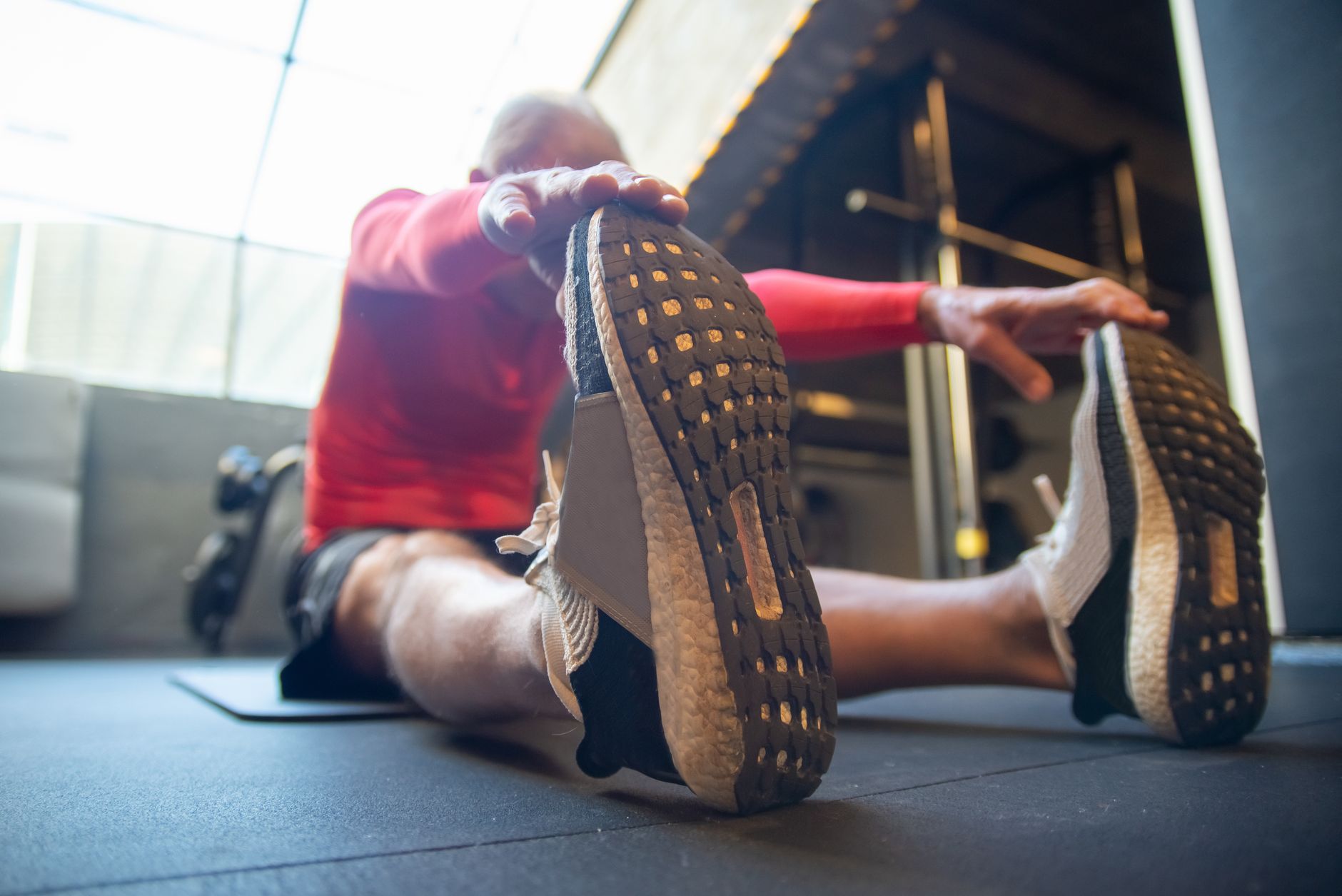
The Warm-Up Most People Do (And Why It Doesn't Work)
Walk into any commercial gym and watch what people do before their first working set. Most do one of three things: nothing, five minutes on the treadmill at 3 mph, or a few half-hearted arm circles that achieve nothing.
The people who do nothing justify it as "saving time." The cardio crew think they're warming up because their heart rate is slightly elevated. The arm-circle crowd just feel like they should do something.
None of these approaches prepare your body for lifting. A proper warm-up isn't about sweating before you sweat — it's about preparing your joints, muscles, and nervous system for the specific demands of your session. Done right, it takes less than 10 minutes and directly improves your performance.
Why Warming Up Actually Matters
The case for a proper warm-up isn't just injury prevention (though that matters). It's about performance.
Increased muscle temperature: Warm muscle tissue contracts faster and generates more force than cold tissue. A cold muscle is like cold putty — stiff, less pliable, slower to react. Raise the tissue temperature and that changes.
Improved range of motion: Joints lubricated and moved through their full range before loading tolerate heavier work better. Trying to hit depth on a squat without addressing hip and ankle mobility is asking for compensation patterns that build up over time.
CNS activation: Your central nervous system needs to "wake up" for heavy lifting. This is why your first working set often feels heavier than your second — the neural drive isn't fully activated yet. A smart warm-up gets your nervous system primed so your first set counts.
Reduced injury risk: Tendons and ligaments take longer to warm up than muscles. Loading a cold tendon with maximal effort is how you end up with patellar tendinopathy, rotator cuff issues, and lower back problems that derail training for months.
The five-minute treadmill jog raises heart rate and body temperature slightly. It does almost nothing for hip mobility, shoulder preparation, or pattern activation. You're warm — you're not ready.
The Three Components of a Proper Warm-Up
A complete warm-up has three layers, each serving a different purpose.
1. General Warm-Up (2–3 minutes)
This is the only part where cardio earns its place. The goal is to raise core body temperature, increase heart rate, and start blood flow to working muscles. Two to three minutes is enough — you're not trying to fatigue yourself.
Options that work:
- Rowing machine at moderate effort
- Bike or ski erg
- Jump rope (light pace)
- Brisk walking or light jog
Keep it short. You want your heart rate elevated and a light sweat — not gassed before your first set.
2. Dynamic Mobility Work (4–6 minutes)
This is the layer most people completely skip, and it's the most important one for performance.
Dynamic mobility means moving joints through their full range actively — not static stretching (which actually reduces force production when done pre-workout), but controlled movement that takes your joints through the ranges you'll use in your session.
A universal dynamic warm-up sequence that works for most lower body sessions:
Hip circles: 10 reps each direction per leg. Stand on one leg, draw circles with the opposite knee. Mobilises the hip joint.
Leg swings: 10 reps forward/back and 10 reps lateral per leg. Hold onto a rack for balance. Opens hip flexors and adductors dynamically.
World's greatest stretch: 5 reps per side. From a lunge position, place the same-side hand on the floor, rotate the opposite arm up toward the ceiling. Hits hip flexors, thoracic spine, and hamstrings in one movement.
Ankle circles and calf raises: 10 circles each direction, 15 calf raises. Often neglected, critical for squat depth.
Thoracic rotations: Seated or quadruped, 10 reps per side. Opens the upper back — vital for bench press and overhead work.
Band pull-aparts (if upper body day): 20 reps. Activates rear delts and mid-traps before any pressing.
Adjust for your session. Lower body day emphasises hip and ankle work. Upper body day leans into shoulder, thoracic, and wrist preparation. The above covers the full body well.
3. Activation and Movement Prep (2–3 minutes)
This bridges mobility work and your working sets. The goal is to activate specific muscles and rehearse the movement pattern you're about to load.
Glute activation before squats or deadlifts: Banded clamshells or banded monster walks — 2 sets of 15. Glutes are chronically underactive in most people; reminding them to fire before loading hip hinge and squat patterns prevents the knees from caving and the lower back from taking over.
Scapular retractions and face pulls before pressing: 2 sets of 15. Sets up the shoulder joint correctly before you load it.
Empty bar or light load rehearsal: Before your first working set of any compound movement, run the movement with an empty bar or very light weight. Not as a warm-up set in the traditional sense — as a technical rehearsal. Check your bracing, foot position, and bar path before weight makes errors load-bearing.
Exercise-Specific Warm-Up Sets
This is separate from your pre-workout warm-up and belongs within your actual session.
For any heavy compound movement (squat, deadlift, bench, overhead press), work up in sets before your first working weight:
- Empty bar × 10
- 50% of working weight × 5
- 70% of working weight × 3
- 85% of working weight × 1–2
- Working weight × prescribed reps
This isn't wasted effort — it's practice reps that groove the pattern and prepare your joints for maximal effort. The CNS activation from the 85% set means your first working set feels more manageable.
Adjust the ramp based on the movement and your experience level. For isolation exercises (curls, lateral raises), a couple of lighter warm-up sets is sufficient — you don't need a full ramp.
What to Skip: Static Stretching Before Lifting
Static stretching — holding a stretch for 30+ seconds — before lifting reduces force production acutely. Multiple studies have found acute strength and power decreases following prolonged pre-workout static stretching.
This doesn't mean static stretching is bad — it's excellent post-workout or on rest days for improving mobility over time. But doing a five-minute hip flexor stretch before squatting will make the first few sets feel weaker, not better.
If you have specific tightness to address pre-session, keep static holds under 10–15 seconds as part of a dynamic sequence, rather than prolonged static stretching.
A Complete 10-Minute Warm-Up Template
For a lower body session (squats, deadlifts):
| Stage | Exercise | Duration |
|-------|----------|----------|
| General | Rowing machine at moderate pace | 3 min |
| Mobility | Leg swings, hip circles, world's greatest stretch, ankle work | 4 min |
| Activation | Banded clamshells × 15, banded squats × 15 | 2 min |
| Movement prep | Empty bar squat × 10 (check depth and bracing) | 1 min |
For an upper body session (bench, rows, overhead):
| Stage | Exercise | Duration |
|-------|----------|----------|
| General | Bike or row | 2–3 min |
| Mobility | Thoracic rotations, shoulder circles, wrist circles | 3 min |
| Activation | Band pull-aparts × 20, face pulls × 15 | 2 min |
| Movement prep | Empty bar press × 10 | 1 min |
Ten minutes. That's the cost. The return is sessions where you feel ready from rep one, fewer aches the next morning, and tendons that hold up over years of consistent training.
Tracking Your Sessions From the First Rep
A good warm-up means your first working set counts. But counting only matters if you're tracking.
Soma logs every set with weight, reps, and RPE — so you get a real picture of whether you're progressing across sessions. When warm-up is part of your routine, your working sets are consistent enough to track meaningfully. Without the context of how hard the session felt, numbers alone don't tell the full story.
The RPE function is particularly useful here: if your working sets feel harder than usual at the same weight, it might be a recovery issue or a skipped warm-up — both worth noting and adjusting.
Download Soma free on the App Store and track every session with context, not just numbers.