Why Your Glutes Aren't Growing
Most people who want bigger glutes are doing something — squats, lunges, maybe hip thrusts. But they're not seeing results. The usual reasons:
- Not training with enough intensity (the weight never goes up)
- Training frequency is too low (once a week isn't enough)
- Missing key exercises that actually load the glutes
- Not eating enough to support muscle growth
This guide fixes all of that. Here's exactly what it takes to build bigger glutes — the exercises, the structure, the nutrition, and the mistakes to avoid.
The Science Behind Glute Growth
Your glutes are the largest muscle group in your body. They respond to the same principles that drive muscle growth everywhere else:
Mechanical tension — heavy, progressive loading through a full range of motion. This is the primary driver of hypertrophy.
Volume — enough total sets per week to create a growth stimulus. Most research points to 10–20 direct sets per week for hypertrophy.
Frequency — training the glutes 2–3 times per week gives more opportunities for the growth stimulus than once a week.
Progressive overload — consistently increasing weight, reps, or volume over time. Without this, your glutes have no reason to grow.
The glutes have three parts: the gluteus maximus (the bulk of the muscle), the gluteus medius (upper/outer region), and the gluteus minimus (underneath the medius). A complete program trains all three.
The Best Exercises for Bigger Glutes
Hip Thrust
The single most effective exercise for glute growth. It loads the gluteus maximus under peak contraction — at full hip extension — which is the position most squats and deadlifts miss.
How to do it: Sit against a bench with a barbell across your hips. Drive your hips up until your body is in a straight line from shoulders to knees. Squeeze hard at the top. Control the descent.
Start with bodyweight or a light bar to nail the form, then add weight progressively every 1–2 weeks.
Romanian Deadlift (RDL)
The RDL loads the glutes in the stretched position — the opposite of the hip thrust. Together, these two exercises cover the full range of glute development.
How to do it: Stand with a barbell or dumbbells in front of your thighs. Hinge at the hips, pushing them back while keeping your back straight, until you feel a deep stretch in your hamstrings and glutes. Drive your hips forward to return to standing.
Barbell Squat / Goblet Squat
Squats develop the glutes effectively when done through full range of motion. Shallow squats shift the load to your quads. Getting below parallel — hip crease below knee — is what activates the glutes.
For beginners, the goblet squat (holding a dumbbell at your chest) is easier to learn and often hits the glutes better because it naturally encourages depth.
Bulgarian Split Squat
One of the most effective unilateral lower-body exercises. Because you're working one leg at a time, you can't hide an imbalance — and the range of motion is significant.
How to do it: Elevate your rear foot on a bench. Lower your front knee toward the floor while keeping your torso upright. Drive through your front heel to return to standing.
Expect these to be humbling at first. The quad burn fades as you get stronger; the glute development is real.
Hip Abduction (Cable or Machine)
This targets the gluteus medius — the muscle responsible for the upper, rounder shape of the glute. Most glute programs underemphasize abduction work and then wonder why their glutes look flat at the top.
Use a cable machine with an ankle attachment, or a dedicated hip abduction machine. Focus on controlled reps and a strong squeeze at peak contraction.
Glute Bridge
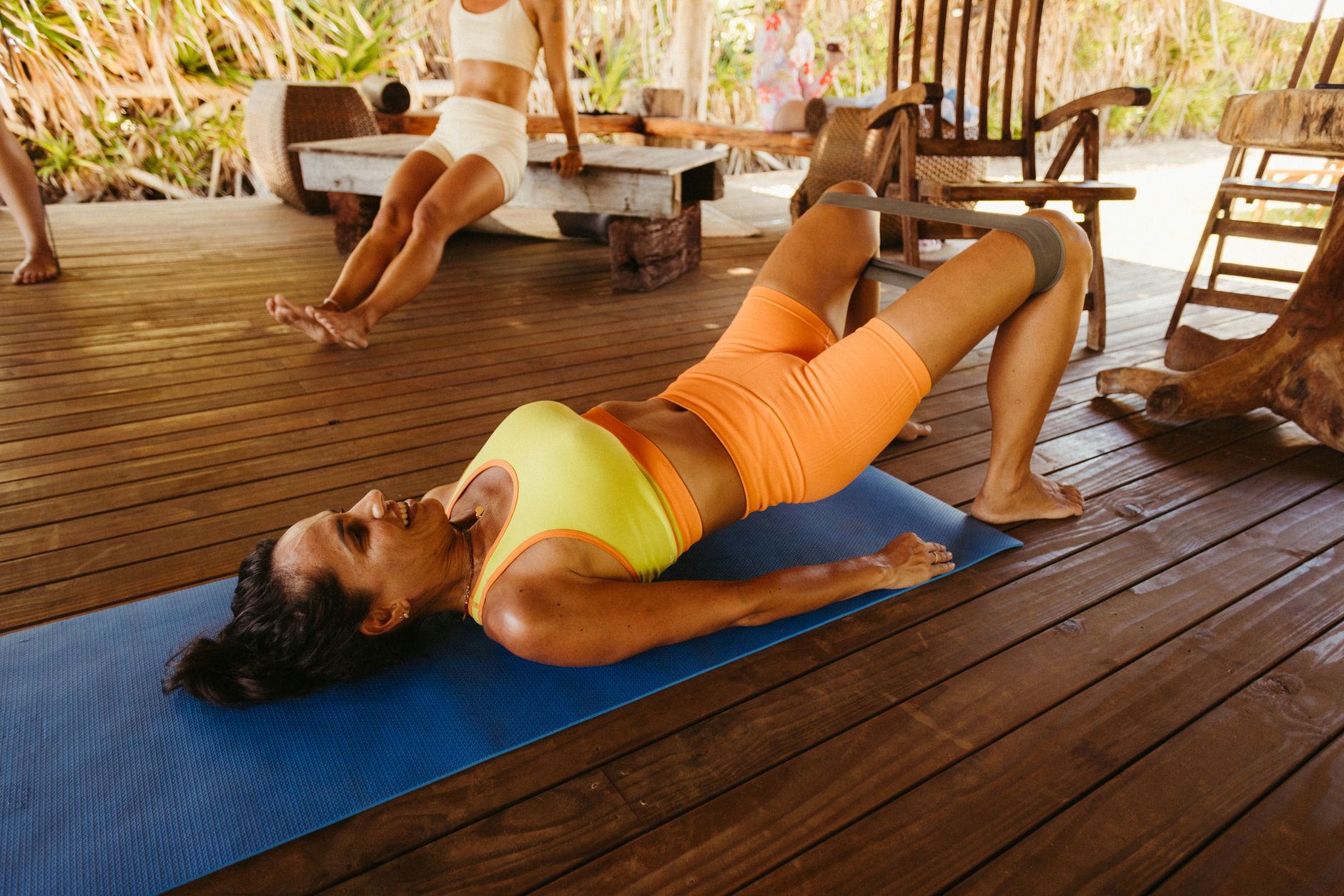
The floor version of the hip thrust. Great for beginners, useful as a warm-up activation exercise, and effective when loaded with a plate or dumbbell across the hips.
Donkey Kicks / Kickbacks
Minimum equipment, easy to learn, and a good isolation finisher. Use a cable machine for resistance — bodyweight donkey kicks eventually stop being challenging enough to drive growth.
How to Structure Your Glute Training
Frequency
Train your glutes directly 2–3 times per week. This gives each session enough recovery time while maximizing the weekly growth stimulus. Legs once a week won't cut it if glute development is the goal.
Volume
Aim for 12–18 direct sets per week across all glute exercises. This doesn't mean 18 sets in one session — spread them across your weekly training.
A simple structure:
- Day 1 (Glute + Hamstring focus): Hip thrust, Romanian deadlift, cable kickback — ~10 sets
- Day 2 (Quad-led lower body): Squat, Bulgarian split squat, hip abduction — ~8 sets
- Day 3 (Optional): Lighter glute activation work, bridges, abduction — 6–8 sets
Load and Reps
For hypertrophy, 8–15 reps at challenging weights works well. That doesn't mean every set should be the same — mix heavier sets (6–8 reps, higher weight) with moderate sets (12–15 reps) to develop both strength and size.
Each set should be genuinely hard by the last few reps. If you're finishing sets with 5 reps left in the tank, the weight is too light.
Progressive Overload
This is where most people stall. Every 1–2 weeks, either:
- Add weight to the bar/cable
- Add a rep or two at the same weight
- Add a set
If you're doing the same hip thrust at the same weight with the same reps as you were two months ago, nothing will change.
Tracking your workouts is essential for this. You need to know what you did last session to beat it this session.
The Nutrition Side
You Need to Eat Enough
This is the part most people get wrong. You cannot build significant muscle in a large calorie deficit. The glutes are a muscle — they need energy and protein to grow.
If you're eating well below your maintenance calories (trying to lose fat at the same time), you'll get stronger and your glutes will look better as body fat drops — but you won't see the size development you're after.
For dedicated glute growth:
- Eat at maintenance or a small surplus (100–200 calories above maintenance)
- Body recomposition (building muscle and losing fat simultaneously) is possible, but it's slower — best for beginners or people returning after a break
Protein
Aim for 0.7–1g of protein per pound of bodyweight per day (1.6–2.2g per kg). Protein provides the building blocks your glutes need to repair and grow after training.
Focus on hitting your protein target before worrying about anything else.
Timing
Eat protein across multiple meals throughout the day. A post-workout meal or shake within a few hours of training helps with recovery, but overall daily protein matters more than precise timing.
How Long Does It Take?
Honest answer: 3–6 months to see noticeable shape changes with consistent training and adequate nutrition.
Here's the rough timeline:
- Weeks 1–4: Strength increases, technique improves, neuromuscular adaptations
- Months 2–3: Volume and weight increase, first visible changes begin
- Months 4–6: Meaningful shape development, glutes measurably larger and rounder
Anyone promising dramatic glute growth in 30 days is selling something. Real development takes time — but it's permanent once you earn it.
Common Mistakes That Kill Glute Progress
Training too light. Hip thrusts with an empty bar after six months isn't progressive overload — it's going through the motions.
Not going deep enough on squats. Shallow squats are a quad exercise. Get below parallel.
Skipping hip thrusts. The best evidence-backed exercise for glute maximus growth, and many people don't include it. Add it.
Neglecting hip abduction. The gluteus medius gives glutes their rounded upper shape. Don't train only the maximus.
Not tracking progress. If you're not logging sets, reps, and weights, you can't progressively overload. You're just guessing.
Too much cardio, not enough food. Hours of cardio and a strict deficit will make you smaller everywhere, including your glutes. Calories and protein fuel the process.
Putting It Together
Bigger glutes come down to five things:
- The right exercises — hip thrusts, RDLs, squats, Bulgarian split squats, hip abduction
- Training 2–3 times a week with enough total sets
- Progressive overload — tracking and consistently increasing the load
- Enough protein — 0.7–1g per pound of bodyweight daily
- Enough calories — at or slightly above maintenance for muscle growth
None of this is complicated. The hard part is staying consistent for long enough to see results.
Soma tracks your workouts and nutrition together — so you can monitor progressive overload on your hip thrusts and hit your protein target in the same app. No more switching between a workout log and a food tracker.