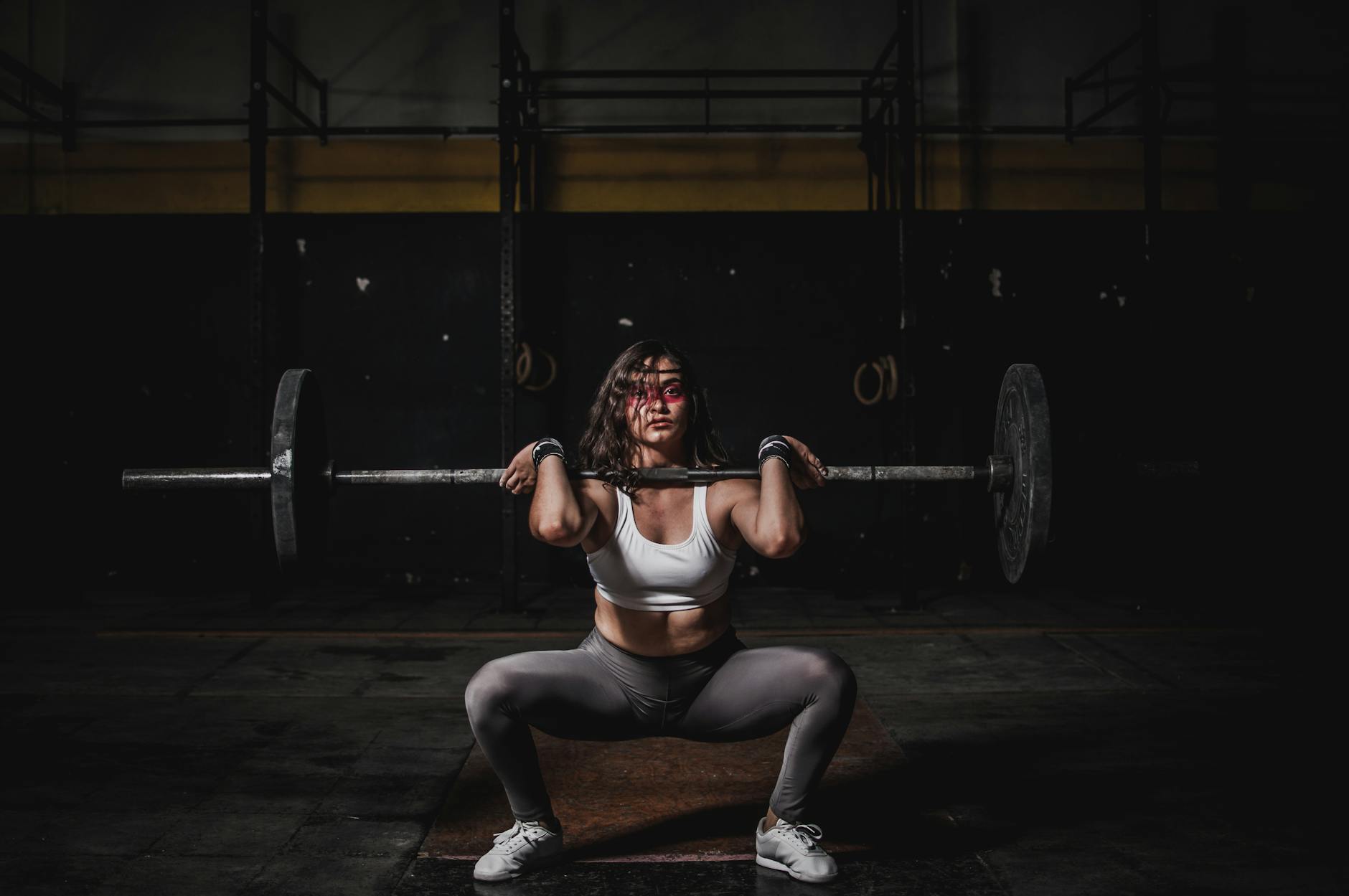
Start with 3 full-body gym workouts per week. Keep the same exercises for 4 weeks, write down your weights, and add reps or weight whenever you hit the top of the range with good form.
That is the whole plan. You do not need six random TikTok workouts. You need a repeatable gym routine that teaches your body how to squat, hinge, push, pull, and train glutes without guessing.
| Your situation | Start with this |
|---|---|
| You have never lifted before | 3 full-body days per week |
| You want fat loss and shape | Lift 3 days, walk daily, hit protein |
| You want glutes without chaos | Keep hip thrusts, RDLs, split squats, and rows |
| You feel lost after 4 weeks | Repeat the plan heavier before changing it |
If you want the bigger path after this plan, read Strength Training for Women Beginners, How to Lift Weights for Women, and Body Recomposition for Women.
The 4-Week Beginner Gym Plan
Use this schedule for the next 4 weeks:
| Week | Days | Goal | Effort |
|---|---:|---|---|
| 1 | 3 | Learn the exercises and leave 3 reps in the tank | RPE 7 |
| 2 | 3 | Add 1-2 reps where form feels solid | RPE 7-8 |
| 3 | 3 | Add weight to your main lifts | RPE 8 |
| 4 | 3 | Beat week 3 by a small amount | RPE 8 |
Train on non-consecutive days if you can: Monday, Wednesday, Friday works well. Tuesday, Thursday, Saturday is fine too.
Each workout should take 45-60 minutes. If it takes longer, you are probably resting too much, scrolling between sets, or doing extra exercises you do not need yet.
What RPE Means
RPE is how hard a set feels.
- RPE 7: you could do about 3 more reps
- RPE 8: you could do about 2 more reps
- RPE 9: you could do about 1 more rep
Beginners should live mostly at RPE 7-8. Hard enough to grow. Controlled enough to learn.
If you use Soma, log weight, reps, and RPE for each set. Next session, Soma shows what you did last time, so your job is simple: match it or beat it.
Workout A: Lower Body + Push
| Exercise | Sets | Reps | Notes |
|---|---:|---:|---|
| Goblet squat | 3 | 8-12 | Hold a dumbbell at your chest |
| Hip thrust | 3 | 10-15 | Pause and squeeze at the top |
| Dumbbell bench press | 3 | 8-12 | Use a flat or slight incline bench |
| Seated cable row | 3 | 10-12 | Pull elbows toward your hips |
| Dumbbell Romanian deadlift | 2 | 10-12 | Push hips back, soft knees |
| Plank | 3 | 20-40 sec | Ribs down, glutes tight |
Start lighter than your ego wants. The first week is practice. Your squat should look the same on rep 12 as it did on rep 1.
Workout B: Glutes + Pull
| Exercise | Sets | Reps | Notes |
|---|---:|---:|---|
| Leg press | 3 | 10-12 | Feet mid-to-high on the platform |
| Romanian deadlift | 3 | 8-12 | Feel hamstrings and glutes stretch |
| Lat pulldown | 3 | 10-12 | Pull the bar to upper chest |
| Dumbbell shoulder press | 3 | 8-12 | Keep ribs stacked over hips |
| Cable glute kickback | 2 | 12-15 each side | Slow, controlled reps |
| Dead bug | 3 | 8-10 each side | Lower back stays on the floor |
This workout builds the back side of your body: glutes, hamstrings, back, and shoulders. Do not rush the RDL. If you feel it only in your lower back, reduce the weight and practice the hip hinge.
Workout C: Full Body + Glute Focus
| Exercise | Sets | Reps | Notes |
|---|---:|---:|---|
| Dumbbell split squat | 3 | 8-10 each side | Hold onto support if needed |
| Barbell or Smith machine hip thrust | 3 | 8-12 | Add weight when 12 reps feels clean |
| Chest-supported dumbbell row | 3 | 10-12 | Keep chest on the bench |
| Incline dumbbell press | 3 | 8-12 | Stop 1-2 reps before form breaks |
| Cable lateral raise | 2 | 12-15 | Small weight, clean reps |
| Cable crunch or reverse crunch | 3 | 10-15 | Control the lowering phase |
This is the workout most women feel fastest because split squats and hip thrusts are humbling. Keep the reps clean. Wobbling through heavier weight is not progress.
Weekly Progression Table
Use this table every week. It keeps the plan simple.
| Week | What to do | When to increase weight |
|---|---|---|
| 1 | Pick weights you can control for every rep | Do not chase weight yet |
| 2 | Add 1-2 reps to most sets | If all sets hit the top of the rep range |
| 3 | Add 2.5-10 lb to main lifts | If week 2 felt like RPE 7-8 |
| 4 | Try to beat week 3 by one small step | Add reps first, weight second |
Example: if you hip thrust 95 lb for 10, 10, 9 reps in week 1, try 10, 10, 10 or 11, 10, 10 in week 2. Once you can hit 12, 12, 12 with good form, add weight.
That is progressive overload. Not a new workout every day. The same lifts, slightly better.
How Heavy Should You Lift?
Use a weight that makes the final 2-3 reps challenging without making your form fall apart.
Too light looks like this: you finish a set of 12 and could easily do 8 more.
Too heavy looks like this: you cut the range of motion short, swing the dumbbells, or feel pain instead of muscle effort.
The right weight feels a little scary by the last reps, but still controlled. You should be proud of the set, not grateful it is over.
Warm Up Before Each Workout
Do this before every session:
- Walk or bike for 5 minutes.
- Do 10 bodyweight squats.
- Do 10 glute bridges.
- Do 10 band pull-aparts or light cable rows.
- Do 1 lighter warm-up set of your first two lifts.
That is enough. You do not need a 25-minute mobility routine before a beginner workout.
Rest Between Sets
Rest 60-90 seconds for most exercises.
For hip thrusts, RDLs, leg press, and split squats, rest 90-120 seconds if you need it. Short rests can make you feel sweaty, but they also make you weaker on the next set. Strength matters here.
What to Eat With This Plan
Training gives your body the reason to change. Food gives it the materials.
For the next 4 weeks, hit these basics:
- Protein: 0.7-1g per pound of goal body weight per day
- Water: 2-3 liters per day
- Steps: 7,000-10,000 per day if fat loss is a goal
- Calories: small deficit for fat loss, maintenance or slight surplus for muscle gain
If you want to lose fat and build shape, do not crash diet. A 200-300 calorie deficit with high protein works better than starving all week and binging on the weekend.
What Results to Expect
In the first 2 weeks, expect better coordination and less gym anxiety. You will learn where machines are, what weights to grab, and how hard a good set should feel.
By weeks 3-4, expect strength increases. Your hip thrust, leg press, rows, and presses should move up if you are logging and recovering.
Visible body changes usually take 6-12 weeks. That is normal. You are building muscle, not ordering same-day delivery.
Common Beginner Mistakes
Switching workouts too often
A new workout feels productive, but it makes progress harder to measure. Run this exact plan for 4 weeks before changing anything.
Only doing glutes
Glute training matters, but your body looks better when your back, shoulders, legs, and core get stronger too. Full-body training builds the shape most beginners are actually chasing.
Avoiding upper body
Upper body training will not make you bulky overnight. It helps posture, waist-to-shoulder shape, confidence, and everyday strength.
Not tracking weights
If you do not track, you will accidentally repeat the same workout forever. Write down every set. Weight, reps, RPE. No guessing.
Going to failure every set
Failure has a place later. Beginners should stop with 1-3 reps left most of the time. Better form beats dramatic struggle reps.
What to Do After 4 Weeks
If you completed at least 10 of the 12 workouts, do one of these:
- Run the same plan again heavier. Best option for most beginners.
- Move to a 4-day upper/lower split. Good if you enjoy the gym and recover well.
- Add one small focus day. Example: one extra glute or upper-body session.
Do not jump to an advanced six-day split just because week 4 went well. The goal is momentum you can keep.
Track the Plan in Soma
Soma is built for this exact problem: beginners need to know what to do, what they did last time, and when to increase weight.
Use Soma to:
- log every set with weight, reps, and RPE
- see your last workout before each exercise
- track protein and calories beside your workouts
- use photo calorie tracking when typing meals feels annoying
- follow an AI plan when you are ready to move beyond this 4-week template
Download Soma free on the App Store and log Workout A before your next gym session.
The Short Version
Do 3 full-body workouts per week for 4 weeks. Train squat, hinge, hip thrust, push, pull, and core. Log every set. Add reps first, then weight.
That is what this plan tells you to do: start with three repeatable workouts, track your lifts, and get a little stronger every week. If you want to keep going, read Strength Training for Women Beginners, How to Lift Weights for Women, and Hourglass Workout Plan next.
Soma can build the beginner plan, track every set, and keep food logging beside your workouts so you are not stitching the habit together with screenshots.