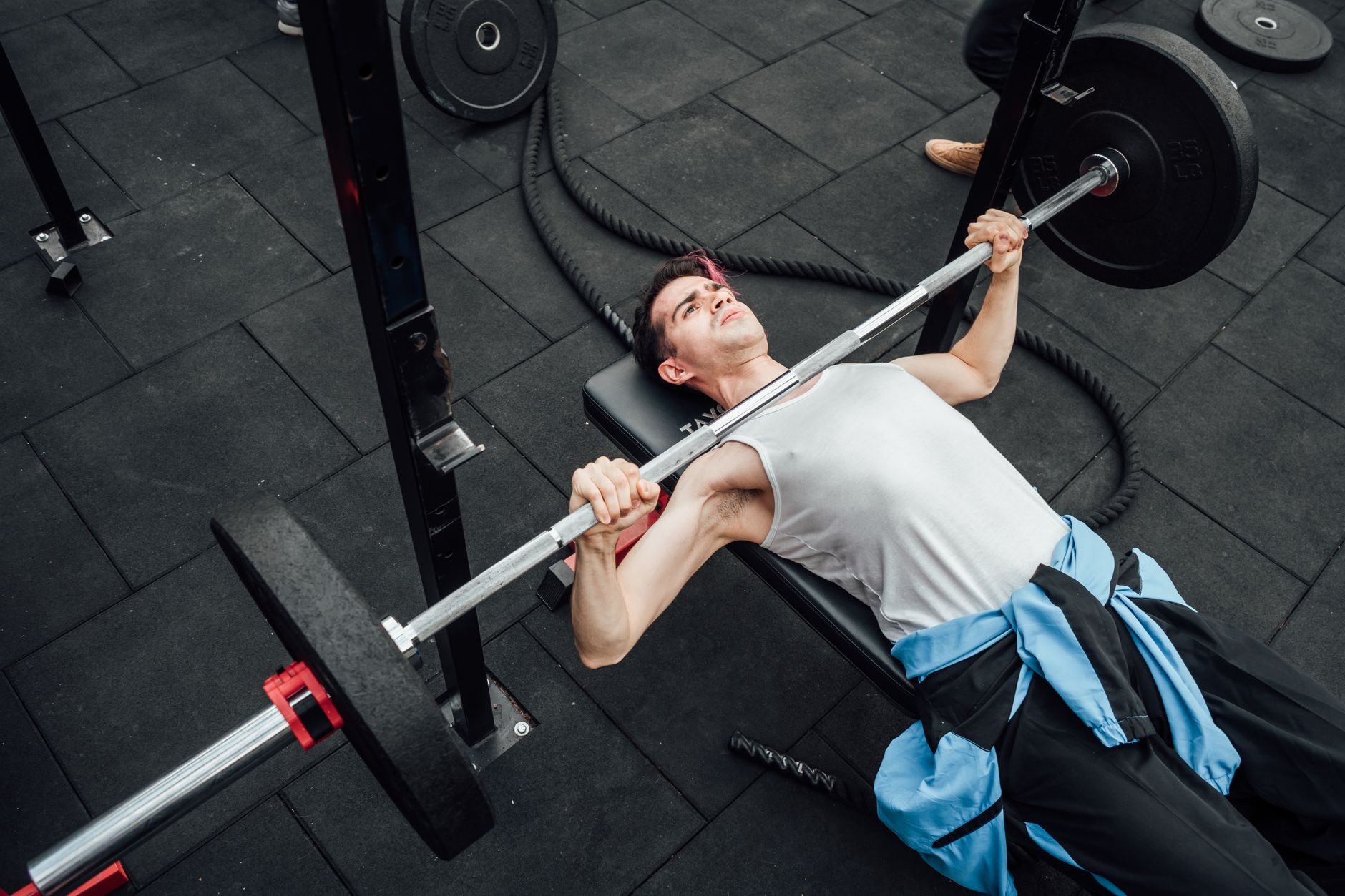
So You've Decided to Start Going to the Gym
Good. That's the hardest part — making the decision and actually following through on it. A lot of people think about joining a gym for months before they do it. You're already ahead.
But now comes the part nobody really prepares you for: walking into a gym and having no idea what you're doing. The equipment is intimidating, everyone else seems to know exactly what they're doing, and there's a constant low-level anxiety that you're doing everything wrong.
This guide is going to fix that. By the end, you'll know what to do, how to do it, what to eat, and how to track your progress — without the noise and bro-science that fills most beginner advice.
What Actually Matters as a Beginner
Before we get into the specifics, it's worth saying plainly: as a beginner, almost everything works. You don't need an optimised training split, perfect macros, or a carefully periodised program. Your body will respond to almost any progressive resistance training because it's completely new to the stimulus.
That means:
- You don't need to spend hours researching the "best" beginner program
- You don't need to go six days a week
- You don't need to eat perfectly from day one
What you do need: consistency, progressive overload, and basic recovery. Everything else is optimization for later.
How Often Should Beginners Train?
Three days per week is the sweet spot for most beginners. It's frequent enough to build momentum and skill, and it leaves enough time for recovery.
A simple structure: Monday / Wednesday / Friday or Tuesday / Thursday / Saturday. The days don't matter much — the gaps do. You want at least one rest day between training sessions.
Full-body workouts on each of those days tend to work better than body-part splits for beginners. When you train a muscle three times a week, you learn the movement patterns faster and accumulate more volume without needing to smash one muscle group in a single session.
What to Actually Do in the Gym
Here's a basic full-body routine that works for almost every beginner:
Day A:
- Squat (or goblet squat) — 3 sets × 8–10 reps
- Push-up (or bench press) — 3 sets × 8–10 reps
- Dumbbell row — 3 sets × 10 reps each side
- Plank — 3 × 30–60 seconds
Day B:
- Romanian deadlift — 3 sets × 10 reps
- Dumbbell shoulder press — 3 sets × 10 reps
- Lat pulldown or assisted pull-up — 3 sets × 10 reps
- Reverse lunges — 3 sets × 10 reps each leg
Alternate Day A and Day B each session. Three days a week, that's six different sessions before you repeat the same one.
Progressive overload is the rule: every week (or every other week), add a small amount of weight or do one more rep than last time. That's it. Your job as a beginner is to add weight to the bar, slowly and consistently.
How to Not Hurt Yourself
Injuries are the biggest threat to beginner progress — not lack of effort, not bad programming. The most common beginner mistakes that lead to injury:
1. Ego-loading. Adding more weight than your form can handle because someone nearby is lifting more. Your ego will heal faster than a slipped disc. Leave it at the door.
2. Skipping the warm-up. Five to ten minutes of light movement before lifting — rowing machine, treadmill walk, or bodyweight exercises — meaningfully reduces injury risk. It's not optional.
3. Ignoring discomfort. Sharp pain means stop. Muscle soreness (DOMS) after a session is normal and will decrease as your body adapts. Sharp pain during a movement is your body telling you something is wrong. Listen to it.
4. Advancing too fast. You don't need to max out on week two. Progress is a long game. Slow, consistent progression beats sporadic heroic efforts every time.
What to Eat
You don't need to have your nutrition dialled in before you start training. In fact, trying to overhaul your eating and your exercise simultaneously is one of the most common ways people burn out and quit.
Start here:
Protein. The single most important dietary variable for people who train. Aim for 1.6–2.2g of protein per kilogram of bodyweight per day. For most people, that means making sure there's a solid protein source at every meal — eggs, chicken, Greek yogurt, cottage cheese, lean beef, fish, protein shakes.
Calories. If your goal is fat loss, you need a moderate calorie deficit — roughly 300–500 calories below maintenance. If your goal is muscle gain, you need a slight surplus — 200–300 calories above maintenance. If you don't know your maintenance, a rough starting estimate is your bodyweight in pounds × 14–16.
Consistency over perfection. One bad meal doesn't derail progress. One bad week barely dents it. The pattern of eating over months and years is what drives results — not any single meal.
Tracking your food, even roughly, makes a big difference. Most people are surprised how far off their estimates are until they actually log for a week.
Tracking Your Progress
Progress in the gym is invisible in the short term. Your weight on the scale will fluctuate. Some weeks you'll feel weak. Some weeks you won't notice any changes in the mirror.
But you'll almost certainly be getting stronger week by week — and that's what matters. The physique changes follow the strength.
This is why logging your workouts is so valuable, especially for beginners. When you can see that six weeks ago you were squatting 50kg for 3×8 and now you're doing 65kg for 3×10, you know you're progressing — even when you can't see it in the mirror yet.
Log:
- What exercises you did
- How much weight you used
- How many reps and sets you completed
That's enough. Review it before each session so you know what you're trying to beat.
The Social Side of Training
A lot of beginners feel self-conscious in the gym — like everyone is watching them. Here's the truth: nobody is watching you. Every experienced gym-goer remembers being a beginner and struggling with the same things. The gym is one of the least judgmental environments that exists, because everyone in there is just trying to work on themselves.
Beyond that, there's strong evidence that training with others — or even just being around people who train — significantly improves consistency and motivation. If you can find a gym partner, do it. Even someone to text about your sessions creates accountability.
Some people use fitness apps with leaderboard features for this — competing with friends on volume, streaks, or personal records. The social pressure is surprisingly effective at getting you to show up when motivation is low.
What to Expect in the First 90 Days
Weeks 1–2: The DOMS (delayed onset muscle soreness) will be rough. Your muscles are responding to a new stimulus and it takes a couple of weeks to adapt. Push through — it gets better fast.
Weeks 3–6: Soreness fades, and you start getting noticeably stronger. This is the "newbie gains" window — your nervous system is adapting, you're learning the movements, and your strength will increase rapidly even before significant muscle growth occurs.
Weeks 7–12: Real adaptation kicks in. If you're eating enough protein and sleeping well, you'll start to see visible changes. Your form on compound movements will feel much more natural. You'll have a rhythm.
The honest timeline: Three months of consistent training will put you in better shape than the vast majority of the population. That's not flattery — most people don't show up consistently. Three months of boring, consistent work genuinely sets you apart.
Building the Habit
The biggest threat to your gym progress isn't bad programming. It's not even bad nutrition. It's stopping.
The gym becomes easier after the first 90 days because the habit is forming — it stops being a conscious daily decision and starts being just what you do. Your job in the first three months is to protect that window.
A few practical things that help:
- Schedule gym time in your calendar like a meeting you can't miss
- Pack your bag the night before so there's no friction in the morning
- Track your workouts so every session has something to beat
- Lower the bar when needed — a 20-minute session is better than a skipped session
Don't let perfect be the enemy of consistent.
One App That Ties It All Together
One of the challenges with getting started is that there are so many things to track: your workouts, your sets and reps, your food, your progress photos, your calories. Most people use four or five different apps and still feel like they're missing something.
Soma was built specifically for this problem — it handles workout tracking with AI-generated plans, photo calorie tracking, RPE logging, and a social leaderboard where you can compete with friends. It's designed for exactly the person who just got started: enough structure to be useful, not so complicated that it overwhelms you.
The AI workout plans are especially useful for beginners who don't yet know what program to run — Soma asks about your goals, schedule, and experience level, then builds a plan that adapts as you get stronger.